How to build a construction estimate that holds up
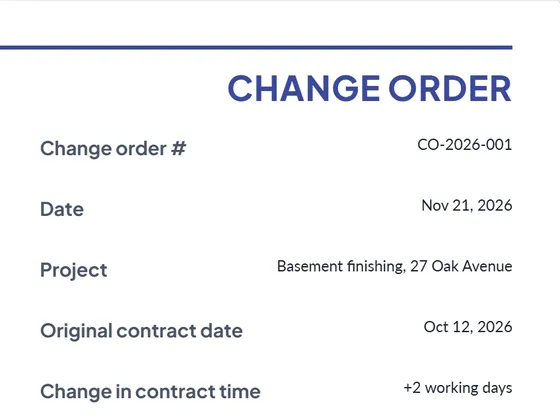
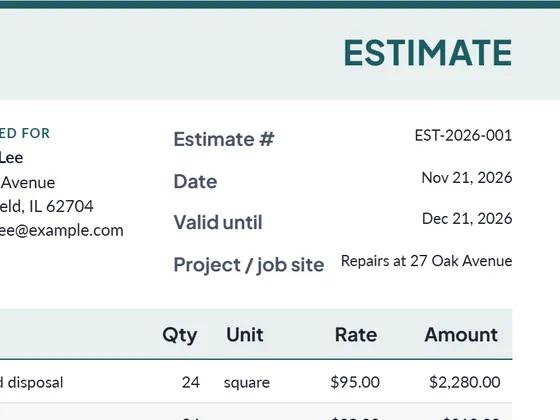
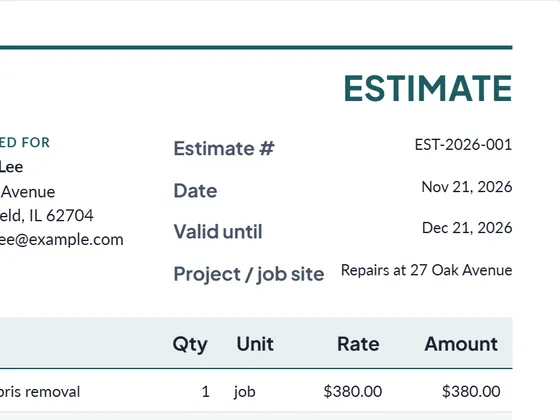
- Break the job into phases (demo, framing, rough-ins, drywall, finishes) instead of one lump sum. Clients accept detailed prices more easily, and a later change order is easier to price.
- Separate labor and materials: labor in hours, materials by unit (sheets, square feet, linear feet).
- Include the "invisible" costs: permits, dumpster, equipment rental, delivery, clean-up.
- Add your markup and contingency as their own lines or inside your rates. Many contractors plan 5–10 % contingency on renovations.
- Ask for a deposit and state the validity period: material prices move.
When the job is done, switch the same document to a construction invoice.
Frequently asked questions
Should I show my markup on the estimate?
Most contractors build markup into their unit prices. If your client expects open-book pricing, add markup as a separate line.
How do I estimate square-foot items?
Use "sq ft" as the unit, enter the area as quantity and your price per square foot as rate.
Can I download it as Word or Excel?
Yes. Every document downloads as PDF, Word (.docx) and Excel (.xlsx). The Excel file keeps working formulas for line totals, tax and the grand total, so you can keep editing it offline.
Is it really free?
Yes. Creating and downloading documents is free and needs no account. Free documents carry a small "Created with PlanPrint" line at the bottom. Documents Pro removes it and adds a saved client and item library.
Guides
- Estimate vs quote vs bid vs proposal
What separates an estimate, a quote, a bid and a proposal, when to send which, and what each document should contain. With a side-by-side comparison table.
- How to write an estimate customers say yes to
How to write a job estimate step by step: scope, line items, materials and labor, exclusions, validity date and payment terms, with a worked example.
- Net 30 and 2/10 net 30 payment terms, explained
What net 30, net 15 and 2/10 net 30 mean, how to calculate the due date and the early-payment discount, and why skipping a 2% discount costs about 37% a year.