Escort cards vs. place cards
Escort cards tell guests their table; place cards mark their seat. Which you need, common sizes, what to write on them and how to print and display them.
In short
- Escort cards stand near the entrance and tell each guest which table to go to: name and table number.
- Place cards stand at the table and mark the exact seat: usually just the name.
- You need a way to find the table (escort cards or a seating chart sign). Place cards are an extra for assigned seats.
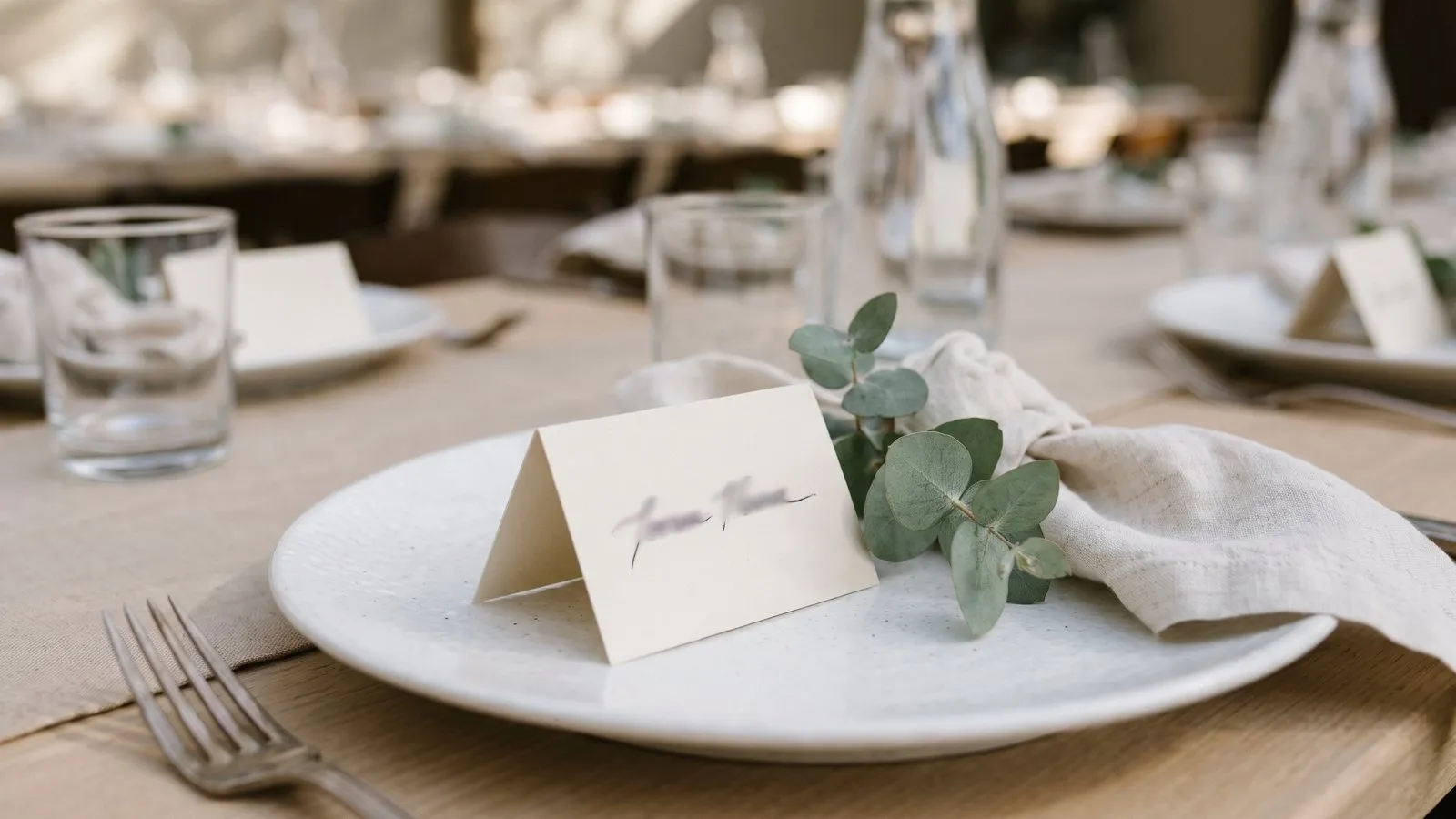
- A common size is 3.5 × 2 inches, flat or folded into a tent card; a meal letter or icon on the card helps servers with plated dinners.
Both are small cards with a guest’s name, so they are easy to mix up. The difference is where they stand and what they tell the guest: an escort card says which table, a place card says which seat.
The difference at a glance
| Escort card | Place card | |
|---|---|---|
| Where | On a table or display near the reception entrance | At each place setting |
| Tells the guest | Their table | Their exact seat |
| Shows | Name + table number or name | Name (and sometimes a meal mark) |
| One per | Guest, couple or household | Seat |
| Order | Alphabetical by last name | By table, for whoever sets the tables |
| Needed? | Yes, or a seating chart sign instead | Only for assigned seats |
WeddingWire puts it plainly: escort cards “specify the assigned table for each guest”, while place cards indicate “the exact seat assigned to each guest”. Place cards on their own are not enough. Without escort cards or a seating chart, guests “will spend time wandering from table to table”.
Which do you need?
- Assigned tables, free seating at the table (the most common): escort cards or a seating chart sign. No place cards.
- Assigned seats, for example a plated dinner with pre-ordered meals: a seating chart sign or escort cards plus place cards.
- A very small wedding of 20 to 30 guests: you may skip assigned tables altogether.
Size and format
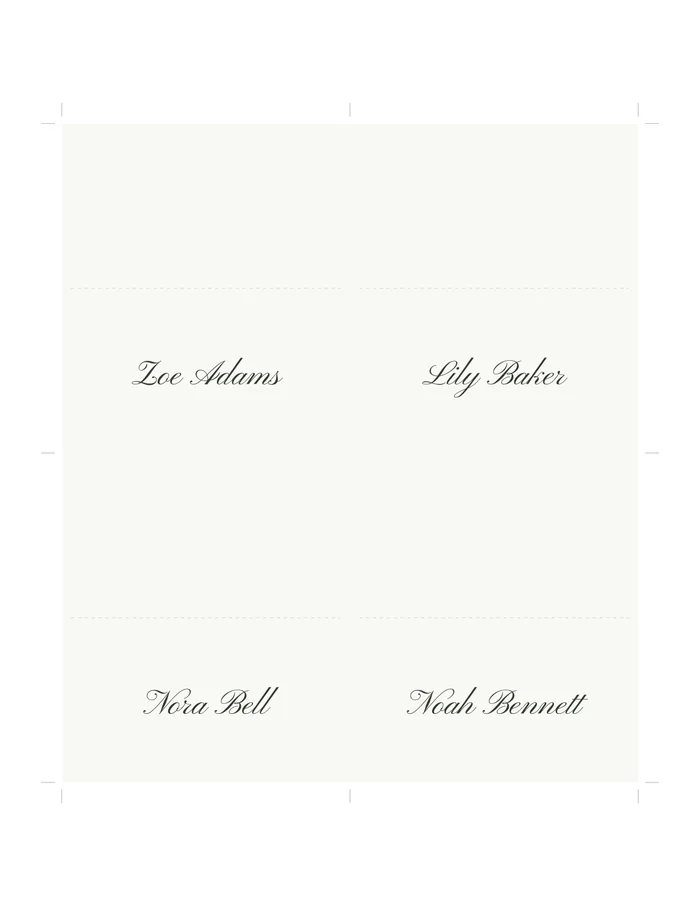
- 3.5 × 2 inches is a common size for both, about the size of a business card. It fits standard card holders and is large enough for a name in script.
- Tent cards are printed on a sheet twice as tall and folded, so they stand on their own. Good for place cards.
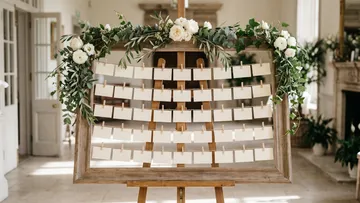
- Flat cards stand in a holder, go into small envelopes, or are pinned or clipped to a display board. Good for escort cards.
What to write
- Escort card: the guest’s name as on the invitation (“Mr. and Mrs. Lee” or “Jordan and Sam Lee”) and the table (“Table 4” or “Lisbon”).
- Place card: the name the guest uses (“Jordan Lee” or just “Jordan” at a family table).
- Meal: for plated dinners, add a small letter, icon or color for the entrée so servers know who ordered what.
How many to print
| Card | Count | Example: 118 guests in 52 households |
|---|---|---|
| Escort cards, one per guest | Guests | 118 |
| Escort cards, one per household | Households (all at the same table) | 52 |
| Place cards | Seats, including children and the couple | 120 |
| Spares | 5–10% extra, blank or in the same style | 6–12 |
One escort card per household is tidier and quicker to find, but only works when everyone in it sits at the same table. As soon as a family is split across tables, give each person their own card. Print spares in the same style for the guest who turns up after all, and bring a fine pen that matches the printed names.
Arranging an escort card display
Guests look for their own name, so sort by last name, not by table. A display for 100 or more cards works best with:
- clear letter dividers (A–C, D–G …) so people go straight to their section,
- rows at eye level, not one long line that everyone walks along,
- enough space for several groups to look at once, because most guests arrive within the same 20 minutes,
- the table names or numbers matching the table number cards exactly: “Table 4” on the card and “4” on the table is fine, “Lisbon” on the card and “4” on the table is not.
For display ideas from boards to mirrors and card walls, see wedding seating chart ideas.
When to make them
Cards are among the last things you print, because they depend on the final seating plan:
- RSVP deadline, then chase the missing replies.
- Finish the seating chart and send the floor plan to the venue.
- Print a test sheet, check the spelling of every name against the RSVPs, then print the rest.
- Sort the cards by table (place cards) or alphabetically (escort cards), in labelled envelopes, and hand them to the person who sets up on the day.
Leave about a week before the wedding for this. Late changes are then a matter of reprinting one or two cards, not the whole set.
Mistakes to avoid
- Misspelled names. Copy names from the RSVPs, not from memory, and ask one more person to read the list.
- Two names for one person. If the invitation went to “Robert”, don’t print “Bob” on the escort card and “Robert” on the place card.
- Cards that fall over. Thin paper tent cards topple in a breeze. Use card stock and fold along a scored line.
- Forgotten late changes. Every change after printing needs a new card. Keep a short list of reprints, and check it the day before.
How to make them without typing every name
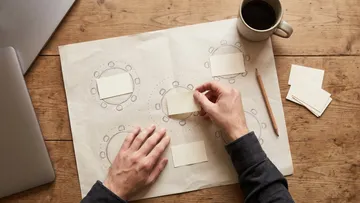
Type names once, in your seating plan, and print the cards from it. In the PlanPrint seating chart maker, the cards use the guest list and tables you already set up: tick “Show table” for escort cards, leave it off for place cards, and tick “Show note / meal” to print meal choices. Every change to the plan updates the cards, the table numbers and the seating sign.
Print on heavy card stock, one test sheet on plain paper first, and cut along the crop marks with a paper trimmer.
Frequently asked questions
Do I need both escort cards and place cards?
No. Most weddings use one way to show the table: escort cards or a seating chart sign. Place cards are added when you assign specific seats, for example for a plated dinner with meal choices.
Can a seating chart replace escort cards?
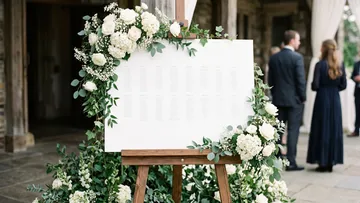
Yes. A large seating chart sign does the same job as escort cards: guests find their name and table. It is usually quicker to set up and works well for larger guest lists.
How should escort cards be ordered?
Alphabetically by last name, so guests find their card quickly when they arrive.
Do couples get one card or two?
Escort cards: one card per couple or household is common, listing both names. Place cards: one per seat, because each person has their own place.
Sources
- Escort cards vs. place cards, WeddingWire
- Wedding seating chart etiquette, The Knot
Photos are AI-generated illustrations; diagrams and tool screenshots are made from the PlanPrint tools. Something out of date or wrong? Tell us and we will correct it.